
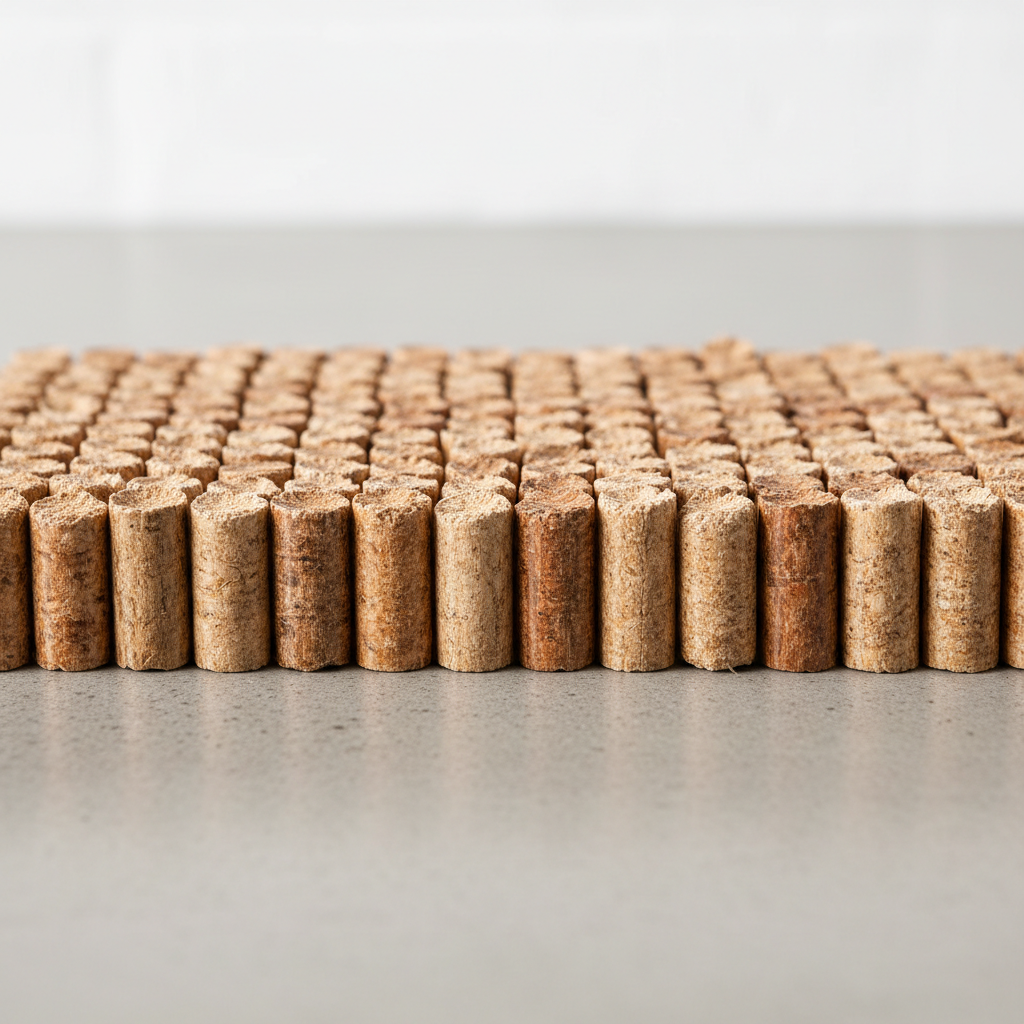
Explore premium wood pellets for sale with comprehensive sustainability certifications. Learn about BTU ratings, quality standards, and heating efficiency.
Wood Pellet Production and Composition
Wood pellets are manufactured from compressed sawdust and wood waste. Raw materials are dried to reduce moisture content. Compression creates dense pellets with high energy density. Natural binders hold pellets together without additives.
- •Raw Material Selection
- •Drying Process
- •Compression Technology
ENplus Certification and Quality Standards
ENplus A1 certification ensures premium quality and consistent performance. Ash content below 0.7% indicates high-quality pellets. Moisture content between 8-12% optimizes combustion efficiency. Durability testing ensures pellets maintain integrity during handling.
- •ENplus Requirements
- •Ash Content Standards
- •Moisture Specifications
Energy Efficiency and BTU Ratings
Wood pellets provide approximately 16-17 million BTU per ton. High energy density reduces storage space requirements. Efficient combustion minimizes ash production and maintenance. Renewable energy source reduces carbon footprint.
- •BTU Output
- •Energy Density
- •Carbon Benefits
Heating Applications and Equipment
Pellet stoves provide efficient home heating with automatic feed systems. Boiler systems heat large buildings and facilities. Industrial applications utilize pellets for process heat and power generation.
- •Residential Heating
- •Commercial Systems
- •Industrial Uses
Bulk Wood Pellet Sourcing and Delivery
Bulk purchasing offers significant cost savings for heating operations. Flexible delivery schedules accommodate storage capacity. Long-term contracts provide price stability and guaranteed supply.
- •Volume Discounts
- •Delivery Options
- •Contract Terms