
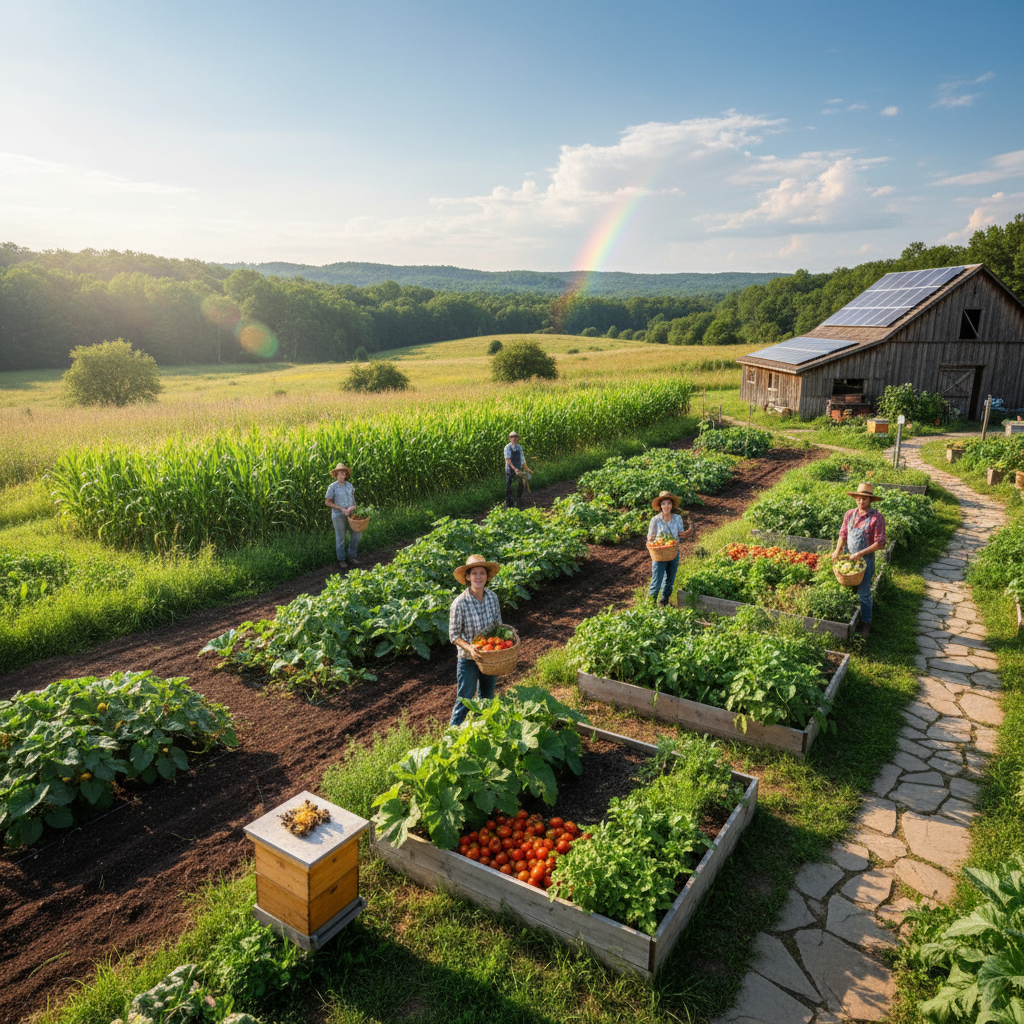
Explore sustainable agriculture practices that improve productivity while protecting the environment. Learn about crop rotation and conservation methods.
Crop Rotation Benefits and Planning
Crop rotation prevents soil depletion and disease buildup. Legumes fix nitrogen, reducing fertilizer needs. Different crops utilize different soil nutrients. Planned rotation improves long-term soil health.
- •Rotation Benefits
- •Nitrogen Fixation
- •Soil Health
Organic Fertilizer and Soil Amendment
Compost improves soil structure and water retention. Manure provides nutrients and organic matter. Cover crops prevent erosion and add organic material. Organic amendments build sustainable soil fertility.
- •Compost Benefits
- •Manure Application
- •Cover Crops
Water Conservation and Irrigation
Drip irrigation reduces water waste compared to flood irrigation. Mulching conserves soil moisture. Rainwater harvesting supplements irrigation needs. Efficient water use reduces costs and environmental impact.
- •Drip Systems
- •Mulching Techniques
- •Water Harvesting
Pest Management and Biodiversity
Integrated pest management reduces chemical pesticide use. Beneficial insects control pest populations naturally. Biodiversity supports ecosystem health. Sustainable pest control protects soil and water.
- •IPM Strategies
- •Beneficial Insects
- •Biodiversity
Profitability and Long-Term Sustainability
Reduced input costs improve profitability over time. Premium prices for sustainable products increase revenue. Soil health ensures long-term productivity. Sustainable practices support generational farming.
- •Cost Reduction
- •Premium Pricing
- •Long-Term Viability