
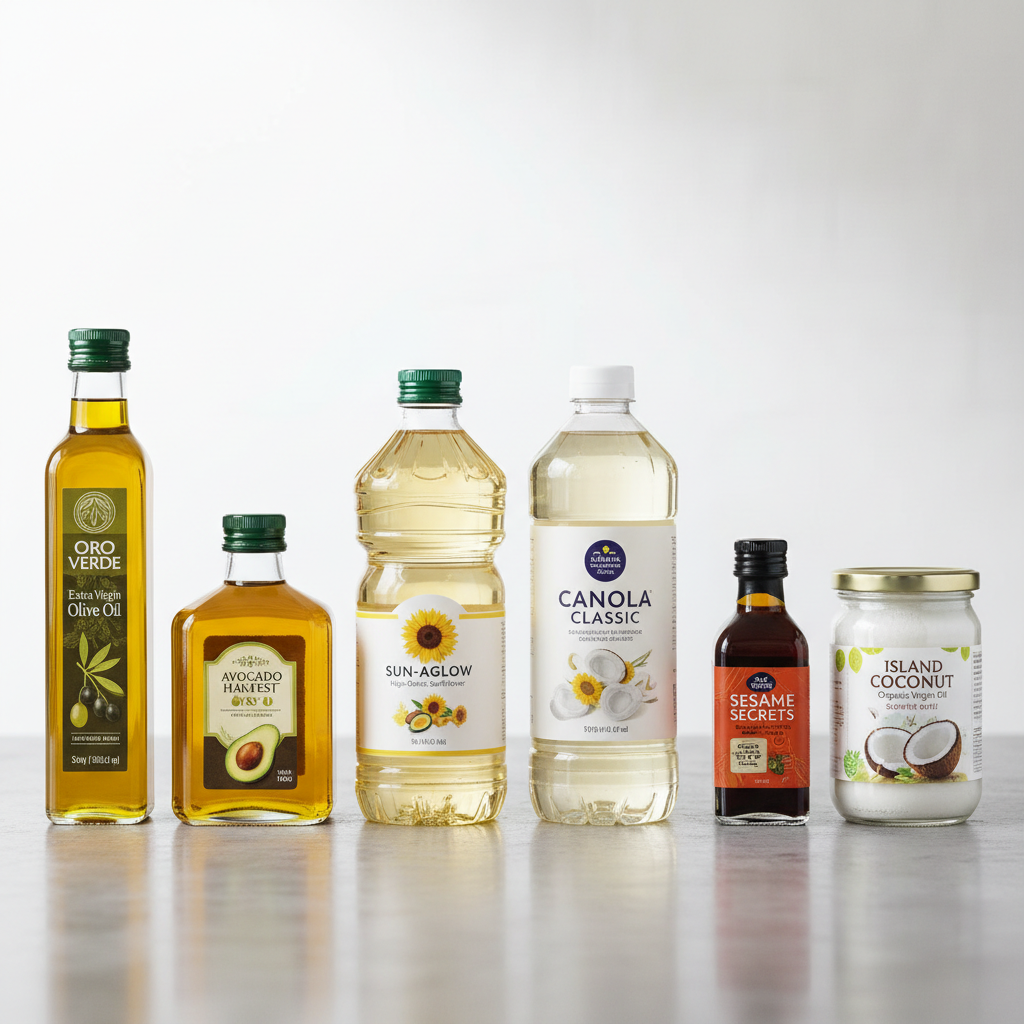
Compare cooking oils including sunflower, palm, and vegetable varieties. Learn about quality differences, pricing, and best applications.
Nutritional Composition Comparison
Sunflower oil is high in linoleic acid and vitamin E. Palm oil contains saturated and unsaturated fats in balanced ratio. Vegetable oil blends offer varied nutritional profiles. Each oil type provides different health benefits.
- •Sunflower Nutrition
- •Palm Oil Composition
- •Vegetable Oil Benefits
Smoke Point and Cooking Applications
Sunflower oil has high smoke point (450°F) suitable for frying. Palm oil smoke point (350°F) works for baking and manufacturing. Vegetable oil blends offer versatile smoke points. Proper oil selection ensures optimal cooking results.
- •Smoke Points
- •Frying Applications
- •Baking Uses
Flavor Profile and Taste
Sunflower oil offers neutral, mild flavor. Palm oil provides subtle, slightly sweet taste. Vegetable oil blends deliver consistent neutral flavor. Oil selection affects final product taste.
- •Flavor Characteristics
- •Taste Impact
- •Product Quality
Stability and Shelf Life
Sunflower oil is prone to oxidation without antioxidants. Palm oil offers excellent oxidative stability. Vegetable oil blends provide balanced stability. Proper storage extends all oil types.
- •Oxidative Stability
- •Storage Requirements
- •Shelf Life
Cost and Market Availability
Sunflower oil pricing varies with crop yields. Palm oil offers consistent pricing and availability. Vegetable oil blends provide cost-effective options. Volume purchasing affects pricing significantly.
- •Pricing Trends
- •Market Availability
- •Volume Discounts